Money basics: 7 ideas that make everything else easier
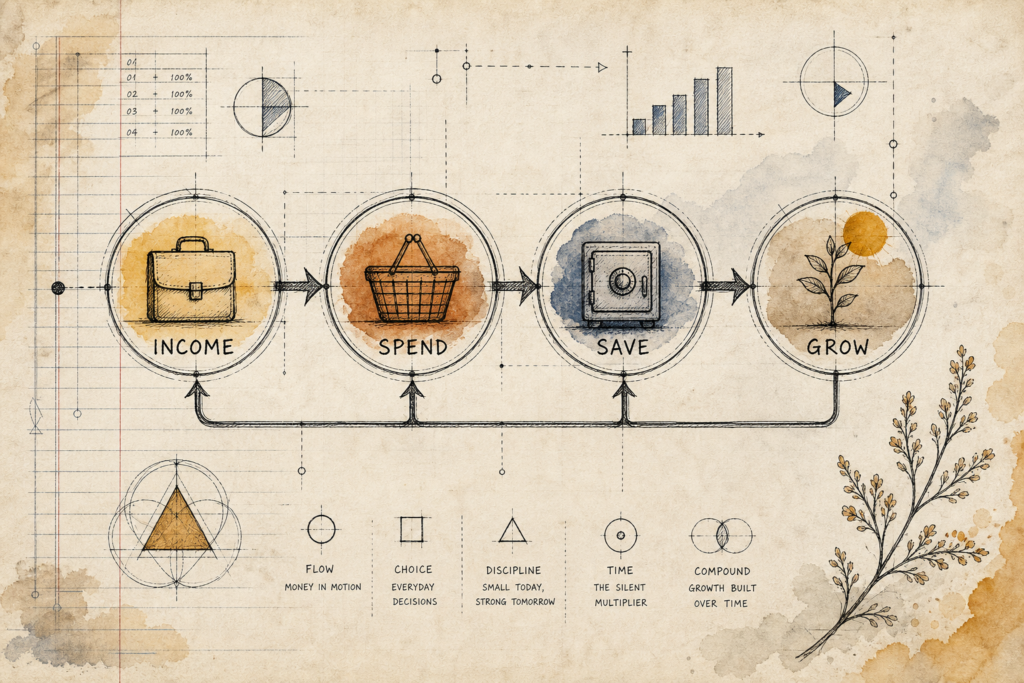
Money can feel like one giant subject, but most everyday decisions become easier when a few building blocks are clear. You do not need a finance degree or a perfect salary to use them. You only need a simple way to see what is coming in, what is going out and what each choice changes.
Here are seven ideas that connect budgeting, debt, saving and investing.
1. Income is the money available to your household
Income is money you receive. It may come from a salary, wages, freelance work, a business, grants, rent, support from family or several smaller sources. For planning, the useful number is usually the amount that actually reaches you after deductions, not the impressive number at the top of a payslip or invoice.
If your income changes from month to month, use a cautious baseline. One approach is to plan essential expenses around a lower, normal month and decide in advance what extra income will do when it arrives. That reduces the chance of treating a strong month as the new normal.
2. Expenses are the jobs your money must do
An expense is money spent or owed. Some expenses are fairly fixed, such as rent. Some are flexible, such as groceries or transport choices. Others are irregular: school items, car services, annual subscriptions or December travel may not appear every month, but they are still real.
Labelling an expense is not a moral judgement. It simply helps you see which costs are difficult to change quickly, which can move a little, and which need to be prepared for before they arrive.
3. Cash flow is about amount and timing
Cash flow is the movement of money in and out over time. Positive cash flow means more came in than went out during the period. Negative cash flow means the opposite. A month can look affordable on paper and still be stressful if debit orders run before income arrives.
Imagine Lerato receives R16,000 during a month and has R15,200 of planned costs. The R800 gap is useful, but timing still matters. If several large payments leave on the first day and part of her income arrives later, she needs enough of a buffer to bridge that gap. A cash-flow view therefore asks two questions: “How much?” and “When?”
4. An asset is something you own or control that has value
Assets include cash, savings, investments, property, equipment and items that could help produce income. Not every asset grows in value, and not every valuable item is easy to sell. A car may help you reach work or serve customers while also losing market value and creating running costs.
The helpful question is not only “Is this an asset?” but also “What does it do for me, what does it cost to keep, and how easily could I turn it into cash if needed?”
5. A liability is an obligation you must pay
Liabilities include debts and other amounts you owe. A home loan, vehicle finance, credit balance or unpaid account creates future payment obligations. The monthly instalment matters, but so do the remaining term, interest, fees and total amount still to be repaid.
Assets and liabilities often sit together. You may own a financed vehicle while still owing money on it. Your financial position becomes clearer when you look at both sides instead of counting only what you can see or use.
6. Saving creates room between today and tomorrow
Saving means keeping some current income for a future purpose. That purpose might be an emergency buffer, school costs, a deposit, a repair or simply a less stressful month. Saving is not the amount left by accident; it becomes more reliable when it has a name and a planned place in your cash flow.
Small amounts still matter. A realistic R200 repeated is more useful than an ambitious R2,000 target that is abandoned after one difficult month. The first aim is often consistency and visibility, not perfection.
7. Compounding means growth can build on earlier growth
Compounding happens when a return is added to an amount and later returns can be earned on the larger total. Time makes the effect more noticeable. The same idea works against you with debt: unpaid interest or charges can increase the balance on which future costs are calculated.
Compounding is not magic and it does not remove risk. Investment returns can vary, and fees, tax and inflation can affect the result. The practical lesson is that time, rate, cost and regular contributions all matter.
How the seven ideas fit together
Income pays expenses. The difference creates positive or negative cash flow. Positive cash flow can build savings or reduce liabilities. Savings may later become assets that support a goal. Compounding can help invested money grow over time or make expensive debt harder to escape.
You can start with one page and four numbers: money in, essential costs, other costs and the amount left. Then list your main assets and liabilities. The purpose is not to produce a perfect personal balance sheet. It is to replace a vague feeling with a clearer picture.
Takeaway
Money basics are connected. Understand income and expenses, watch cash-flow timing, know what you own and owe, save with a purpose, and treat compounding as a long-term process rather than a promise. Once those pieces are visible, the next step is usually easier to choose.
Continue with Saving & Budgeting to turn this picture into a simple monthly plan.