Debt and credit: what to understand before you borrow
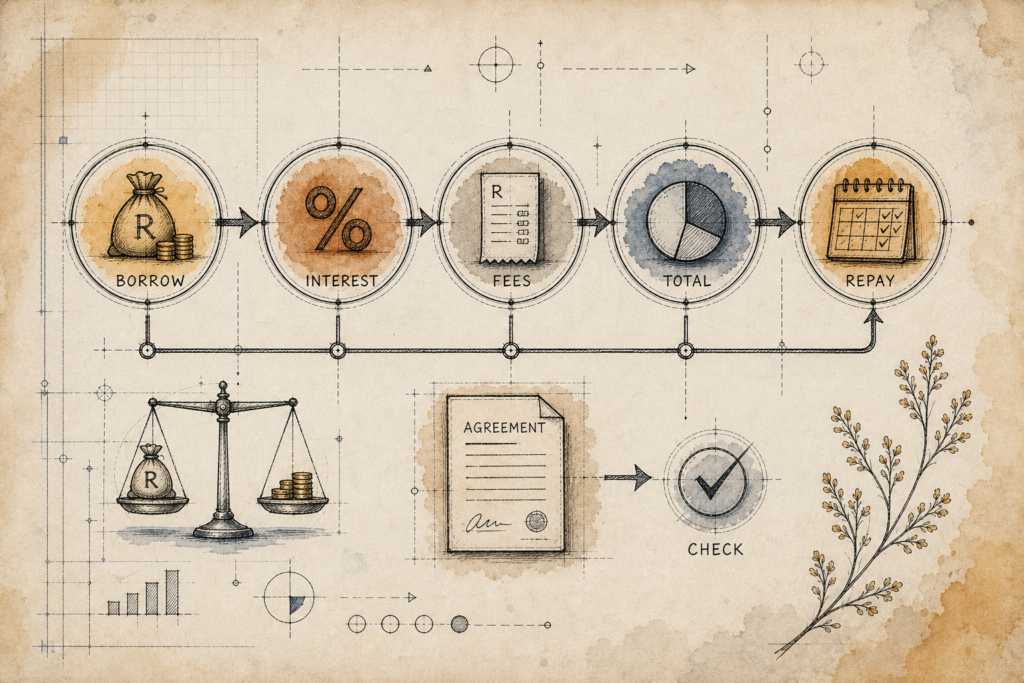
Borrowing can solve a timing problem, fund something useful or spread a large cost. It can also reduce the money available in future months. The important question is not simply whether credit is “good” or “bad”, but what it will cost, what you must promise, and how the repayment fits into an uncertain life.
Credit and debt are related, but different
Credit is the ability to borrow or buy now and pay later under agreed terms. Debt is the amount you currently owe. A credit limit is not extra income. It is the maximum amount a provider may allow you to borrow, and using it creates an obligation.
Different forms of credit work differently. A fixed loan usually has an amount, term and repayment schedule. Revolving credit may allow repeated borrowing up to a limit as repayments free space again. Store accounts, overdrafts, credit cards and financed purchases can therefore create different spending and repayment patterns.
Look beyond the monthly instalment
A smaller instalment can feel more affordable, but it may come from a longer repayment term. Paying for longer can increase the total cost. Ask for the full amount you are expected to repay, not only the first monthly number.
The cost of borrowing may include interest and other charges such as initiation, monthly service or insurance-related costs, depending on the product and current terms. Do not assume two offers with the same headline rate cost the same. Compare the written quotations and fee breakdowns that apply to you.
Understand interest in plain language
Interest is a charge for using borrowed money. It is usually calculated using a rate and a balance over time. The details matter: the rate, how often interest is calculated, whether the rate can change, and how repayments reduce the balance all affect the result.
Late or missed payments can add costs or leave the balance falling more slowly. Paying only a small required amount on revolving credit may keep the account current while extending the debt for much longer than expected.
Affordability needs a buffer
A lender’s approval does not prove that a repayment will feel comfortable in your household. Build your own view using usable income, essential costs, existing repayments and irregular expenses. Then ask what happens if transport, food or electricity costs rise, income arrives late, or an emergency appears.
For example, if a new repayment fits only when every month goes perfectly, it may not be truly affordable. A buffer is the space that lets the plan survive ordinary surprises.
Match the term to what you are buying
Be cautious about repaying something long after its usefulness has ended. Financing a short-lived purchase over a long period can mean paying for yesterday while trying to fund today. Also consider whether the item creates ongoing costs such as maintenance, data, fuel or insurance.
If an asset secures the debt, understand what can happen if repayments fail. “Secured” does not mean safe for the borrower; it means an identified asset supports the lender’s claim.
Questions to ask before signing
- How much will I receive or what exactly am I financing?
- What is every monthly and once-off cost?
- What is the total amount repayable if I follow the schedule?
- Is the rate fixed or can it change?
- How long will the debt run, and can I repay early without an unexpected cost?
- What happens after a late or missed payment?
- Is any insurance included, and what does it actually cover?
- Is an asset at risk if I cannot repay?
Read the current agreement rather than relying on a sales summary or a screenshot. Keep a copy of what you accept.
Compare like with like
Use the same borrowing amount and a similar term when comparing offers. Put the rate, fees, instalment and total repayable amount in one table. A product with a low rate but higher fees may not be cheapest for a small or short loan. A longer term may lower the instalment while increasing the total.
Avoid choosing under pressure. Urgency, guaranteed approval, requests for upfront payment before releasing a loan, or instructions to hide information are warning signs. Verify who you are dealing with through reliable channels.
If repayment is becoming difficult
Do not wait for several missed payments before looking at the situation. List every balance, repayment date and essential expense. Contact providers through official channels to understand available options, and consider help from an appropriately qualified professional when the problem is serious or the choices are unclear.
Avoid taking new, expensive debt simply to create the appearance that old debt is under control. Moving a balance can help only when the full cost, term and behaviour around the debt genuinely improve.
Takeaway
Before you borrow, compare total cost rather than only the instalment. Understand the rate, fees, term, repayment obligations and consequences of difficulty. Test affordability with a buffer, keep the written terms, and step away from pressure or promises that sound too easy.
For the cash-flow side of repayment, revisit Saving & Budgeting.